
Personal Infrastructure through Post
I was born and raised in Philadelphia, and later moved to Los Angeles when I was still in grade school. My parents are immigrants, and I never had a clear sense of what "home" was. I knew it was my house, where my parents and my sisters lived. But later, I learned that a place could be home. I knew my home was Los Angeles.
I wanted to explore this concept of home through a postcard series, examining the inside experience of home (dwellings), the public experience of home (transit), and the infrastructure that connects them together (mail).
Together, the three postcards explore infrastructure at different scales:
Homes anchor daily life within it
Mail connects those spaces across distance
Transit moves people through the city
Infrastructure is not only something we see in maps or buildings—it includes the living systems we participate in cultivating.


The first postcard, “home” shows the interior of my home, the domestic systems (lighting, furniture, spatial arrangement) that support my daily life. Infrastructure can be on an intimate and lived scale, showing how environments rely on layered and highly designed systems that often go unnoticed. For immigrant families like mine, "home" is never just a dwelling. It's built through small acts of cultivation and care. My parents planted vegetables in our yard. Neighbors shared seedlings. These weren't just gardens, they were acts of homemaking in a new place.
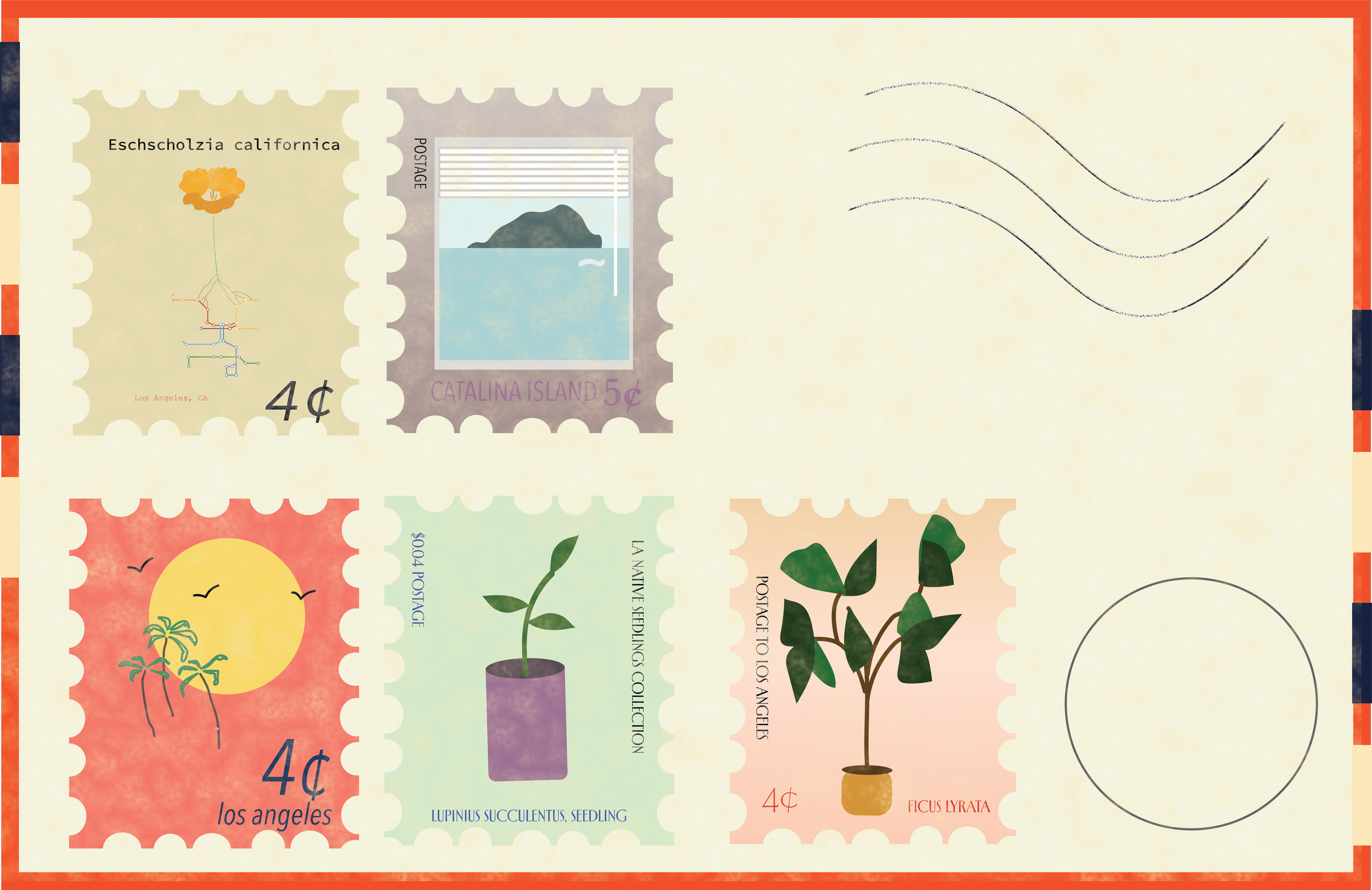
The second postcard, “Infrastructure of Communication”, features stamps depicting elements of living infrastructure, nature-based systems that support urban life in Los Angeles.
The stamps show:
Hoja Banana: Native and adapted plants that provide habitat and cooling
Catalina Island: The threshold between interior and exterior, where domestic space meets the natural environment—visible in the window view and potted plant
LA Native Seedlings Collection: Seed propagation and native plant cultivation, essential for establishing climate-resilient ecosystems
California Poppy: Native wildflowers that support pollinators and require minimal water
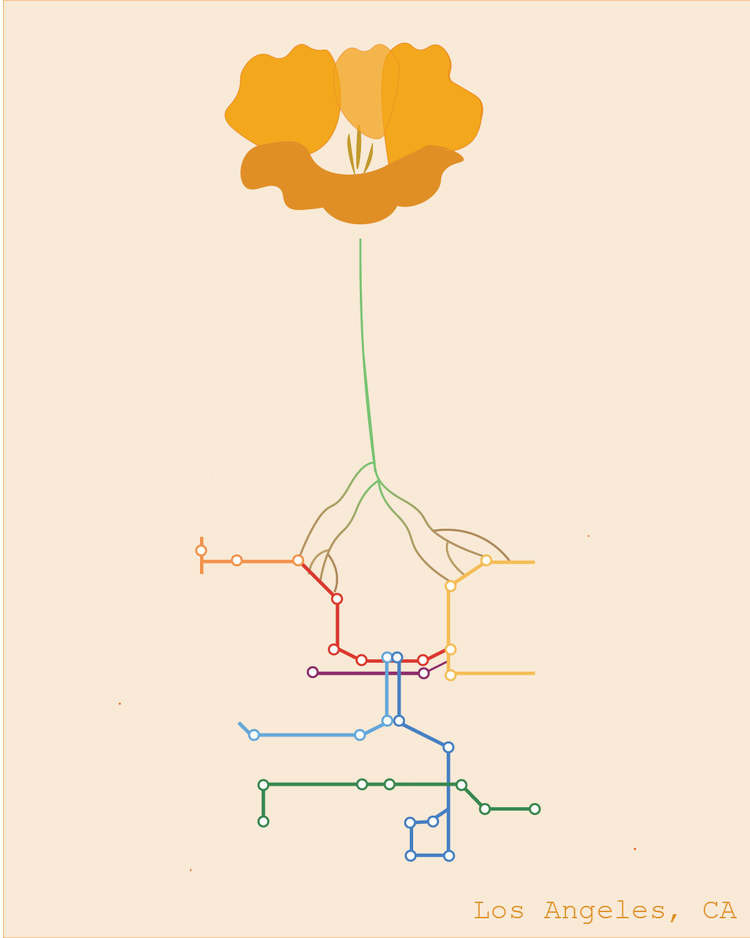
And the third postcard, “Transit”, maps Los Angeles's transit system, how bodies move across neighborhoods. It represents large-scale infrastructure, the visible systems that organize urban mobility and access."
Note: My perception of infrastructure, as a way of noticing the invisible systems that power my world and my home, was informed by the work of the Living Infrastructure Field Kit. It’s an amazing tool that helps L.A. communities design nature-based climate solutions. The Field Kit expanded how I understood infrastructure.